
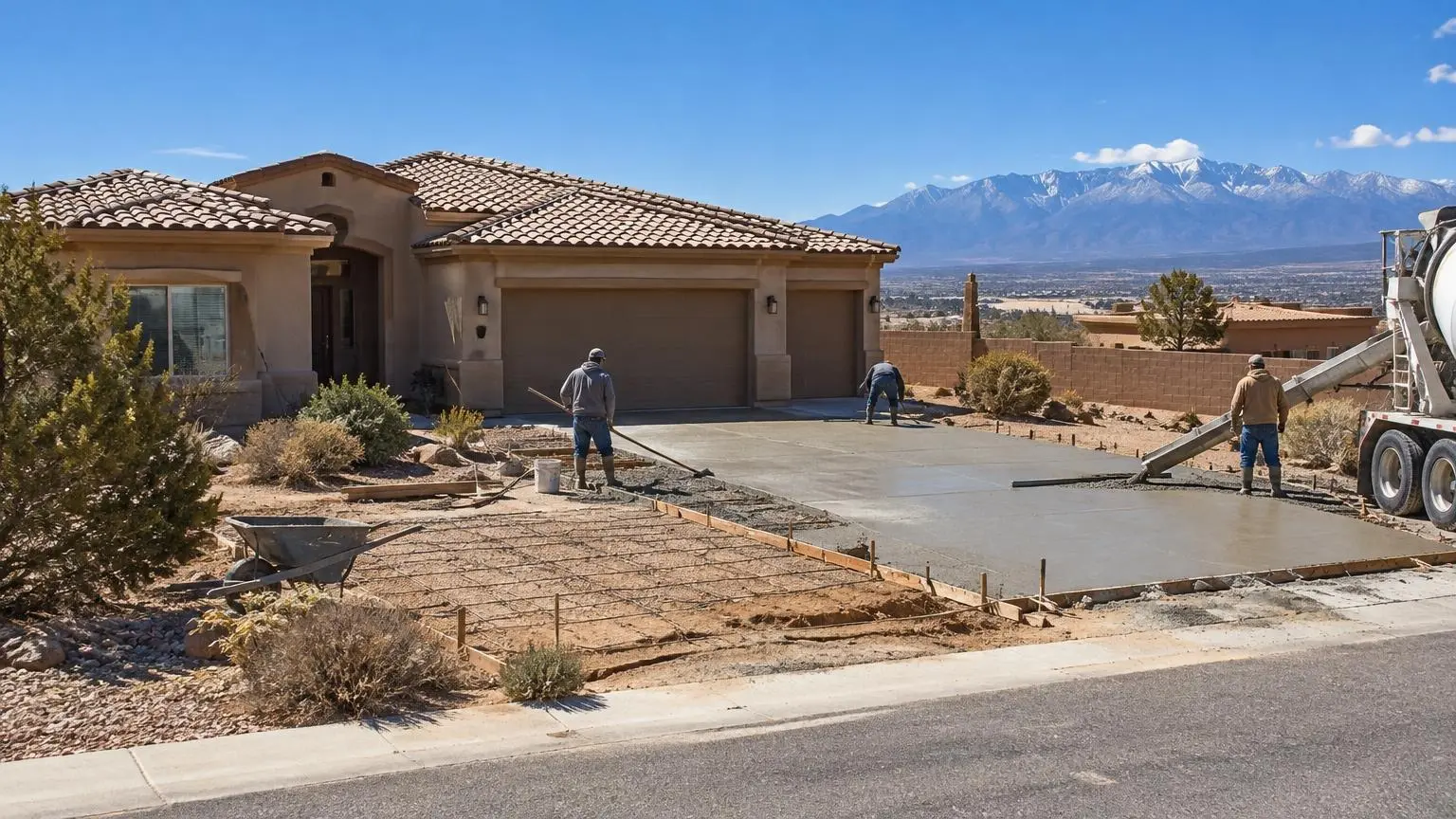
At the base of the Sandias, near the tramway
Concrete Contractors in Sandia Heights, NM
Foothills concrete at over 6,000 feet, where winter is colder and wetter than in the valley.
- Estimate visits start with the ground: grade, runoff and what sits under the old slab
- Quotes broken into lines for area, depth, base, steel, finish and sealer
- Pour dates picked around mesa heat in summer and below-freezing nights in winter
Foothills Concrete Above the City
Sandia Heights is a census-designated place at the western base of the Sandia Mountains, north of Albuquerque, and it is the highest and coldest community on our list of service areas for concrete contractors. Its elevation is listed at about 6,165 feet, more than 600 feet higher than central Rio Rancho. The base station of the Sandia Peak Tramway sits just beyond its northern edge. The 2020 census counted 3,273 residents in 1,600 housing units.
Colder winters than the valley
The climate data on Wikipedia tells the story. Sandia Heights has a record low of minus 30 degrees, compared with 4 in Rio Rancho. The average annual daily low is 34.8 degrees, and the USDA hardiness zone is 7b, with winter lows that can drop to 5 to 10 degrees. Average precipitation is 13.77 inches a year, well above the valley, with August the wettest month at 2.52 inches.
For concrete, that means more freeze-thaw cycles, more snow sitting on driveways and more water working into cracks. Our approach for foothills work:
- Air-entrained concrete for every exterior slab
- Proper curing before the first freeze, so the surface reaches strength
- A penetrating sealer once cured to slow water absorption
- Slopes that shed snowmelt away from the garage and the house
Driveways on a grade
Foothills lots often slope, and a driveway that climbs or drops to the garage has to handle both traction and runoff. We use a coarser broom finish on steeper drives for grip in snow. Water should leave the surface across its width, not run its full length and pool at the garage door. Where the drive meets the street, a well-built apron keeps runoff and gravel from undercutting the slab.
An older population, practical concerns
Wikipedia lists the median age in Sandia Heights at 60.3, with 41.6 percent of residents 65 or older. Safe walking surfaces matter more than ever when snow and ice are part of winter. Projects that help include:
Walkway replacement. Lifted or sunken sections at joints are trip hazards. We replace them with level, well-drained walks.
Step repairs. Crumbling edges and uneven risers on entry steps.
Wider paths. Room for two people side by side, or for a walker.
Textured finishes. Broom or light texture that grips better when wet than smooth or glossy surfaces.
Patios with mountain views
A patio at this elevation gets strong sun in summer afternoons and cold, snowy days in winter. We usually suggest sealed, lightly textured concrete or stamped stone patterns in earth tones that fit the landscape. Since summer rain is heavier here than in the valley, slope away from the house is not optional.
Working in the foothills
Rocky or uneven ground can change how we excavate and form, and slope can affect where a truck can park. We check both before quoting. Sandia Heights is unincorporated Bernalillo County land, and some areas have their own covenants, so we confirm the rules for your address before scheduling.
August rain on a slope
The wettest month here, August, averages 2.52 inches of rain. That is more than Rio Rancho's wettest month by a wide margin, and on a foothills lot it arrives as fast runoff coming down the grade from the mountain side. A driveway that sits across that flow acts like a dam unless it is shaped to pass water around or across it. We look at which way the lot drains before setting forms, and where runoff has to cross a slab, we give it a defined low line and a protected edge so it does not undercut the concrete.
Sandia Heights Climate Facts
- Foothills elevation. Listed at about 6,165 feet at the western base of the Sandia Mountains, just south of the tramway base station.
- Harsh cold extremes. The record low is -30 degrees, and the area is in USDA hardiness zone 7b with winter lows of 5 to 10 degrees.
- Wetter than the valley. Average precipitation is 13.77 inches a year, with August the wettest month at 2.52 inches.
- Older residents. The 2020 median age was 60.3, and 41.6 percent of residents were 65 or older.
Our Services in Sandia Heights, NM
Sandia Heights Questions
Can I use deicing salt on my Sandia Heights driveway?
We advise against salt on concrete, especially in its first winter. Sand or a product labeled safe for concrete is gentler. A good sealer also helps the surface resist damage.
How do you keep a steep driveway from getting slick?
We use a coarser broom finish across the slope, which grips better in snow and rain, and we shape the slab so water drains off instead of freezing in place.
When is too late in the year to pour in the foothills?
Fresh concrete needs time to cure before it freezes. We plan fall pours with enough warm days ahead and use blankets or other protection if nights turn cold.
Free Estimates in Sandia Heights, NM
Free estimates for foothills homes in Sandia Heights.
Concrete Contractors Near Sandia Heights
- Concrete Contractors in Rio Rancho, NM
- Concrete Contractors in Corrales, NM
- Concrete Contractors in Bernalillo, NM
- Concrete Contractors in Albuquerque, NM
- Concrete Contractors in Placitas, NM
- Concrete Contractors in Los Ranchos de Albuquerque, NM
- Concrete Contractors in North Valley, NM
- Concrete Contractors in Paradise Hills, NM
- Concrete Contractors in West Mesa, NM
- Concrete Contractors in Nob Hill, NM
- Concrete Contractors in Old Town Albuquerque, NM
- Concrete Contractors in Downtown Albuquerque, NM
- Concrete Contractors in Barelas, NM
- Concrete Contractors in South Valley, NM
- Concrete Contractors in Huning Highlands, NM
- Concrete Contractors in Fourth Ward, NM
- Concrete Contractors in International District, NM
- Concrete Contractors in Mesa del Sol, NM
- Concrete Contractors in Algodones, NM